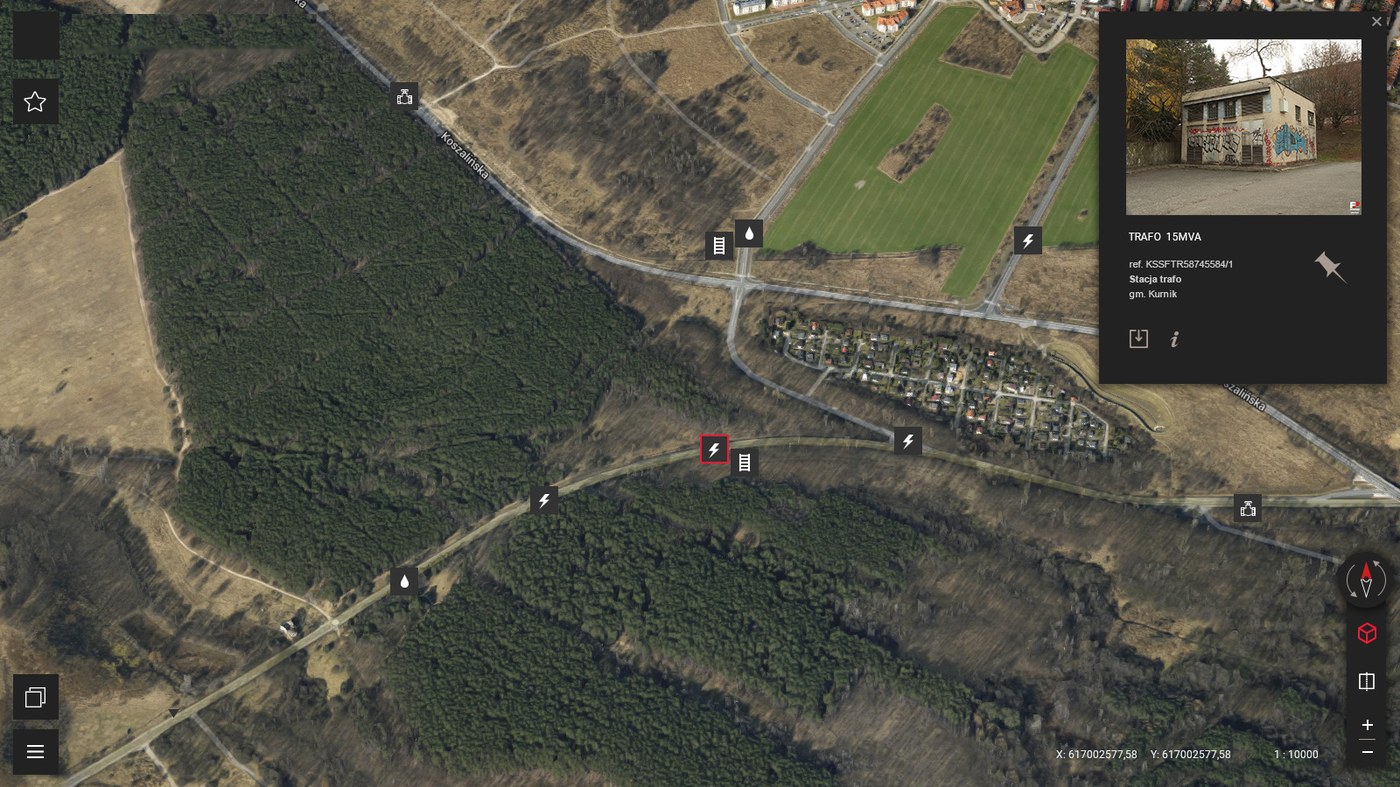
A concept for a GIS-based platform for managing and visualising commercial land holdings.
Teams managing commercial land portfolios generally live in desktop GIS software — capable, expensive, and impossible to hand to a colleague who needs to answer one question. The concept asked how far a browser-based tool could go before that trade-off became unavoidable.
The honest answer is that the constraint is rarely rendering. It is interface density. A desktop GIS client can afford dozens of simultaneously visible controls; a browser tool used occasionally by non-specialists cannot, and every capability added has to earn the screen space it consumes.
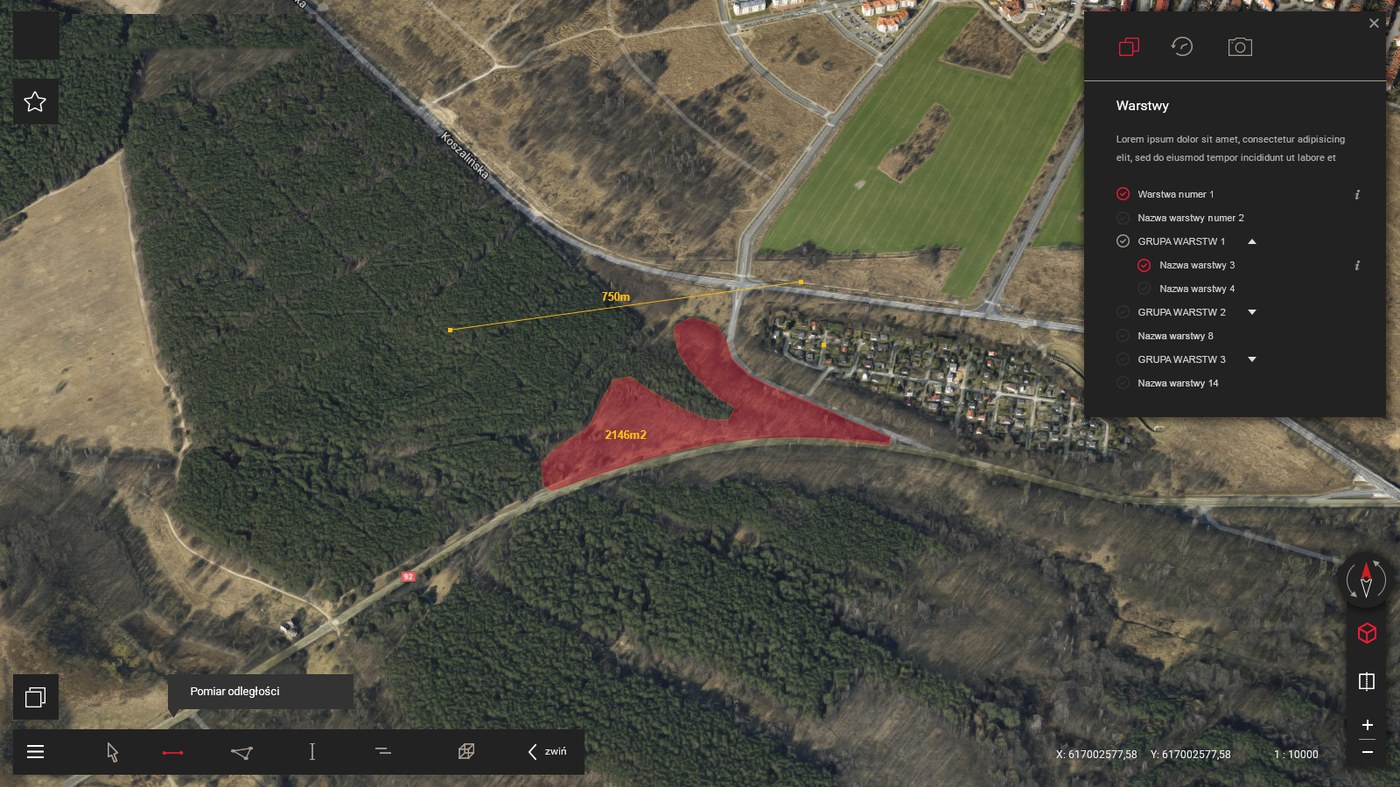
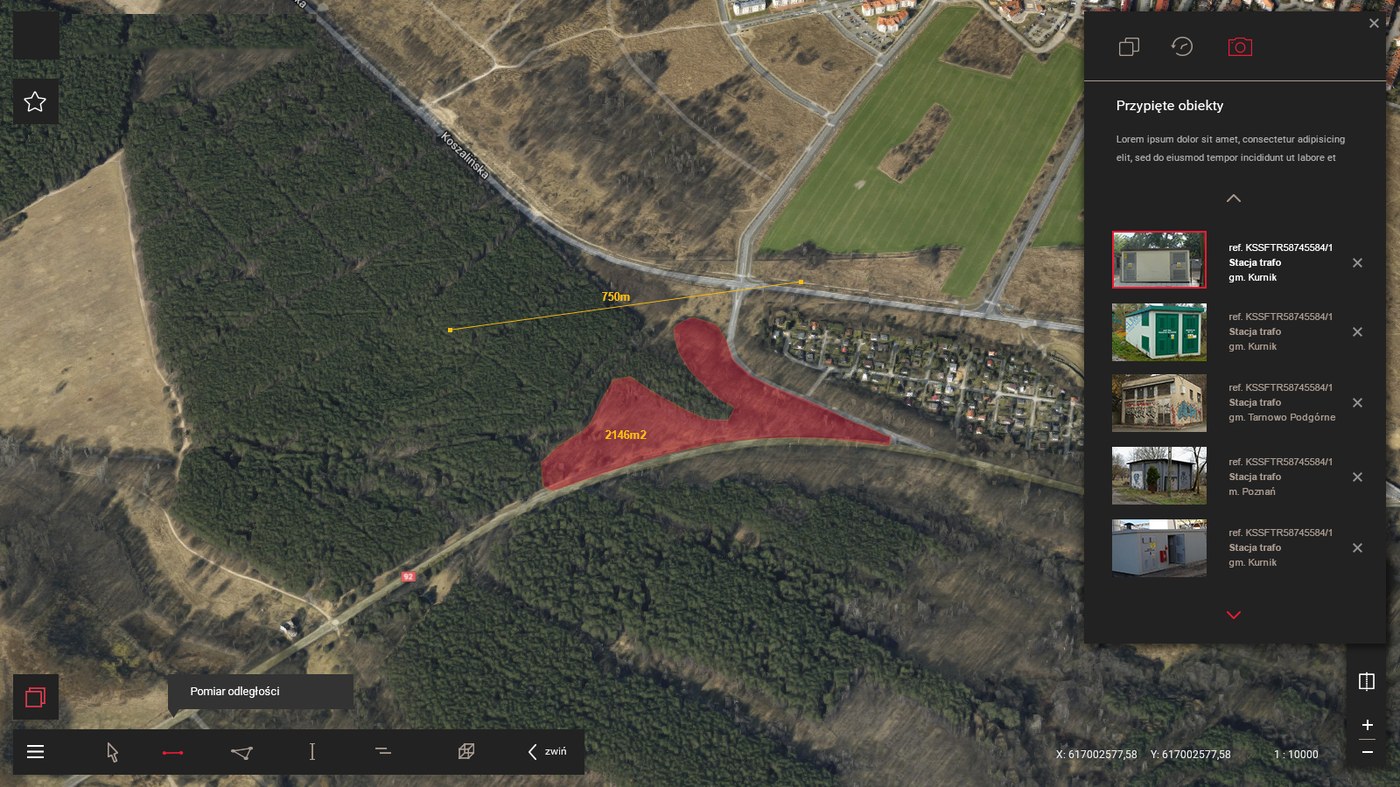
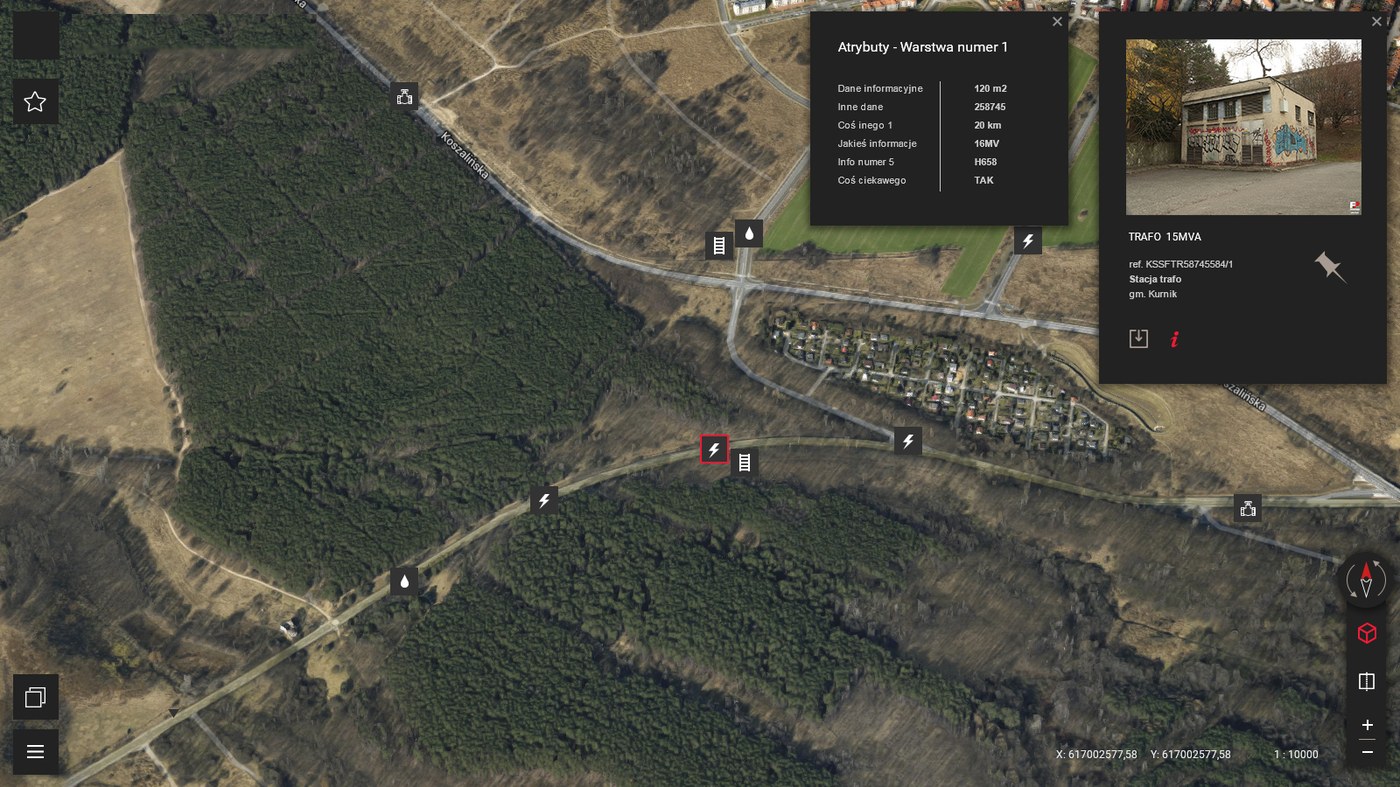
Layers are grouped and individually toggleable, with attribute inspection on any selected feature. Distance and area measurement run directly on the map. Reference objects — substations, in this case — can be pinned to a working set with photographs and reference codes, so a site visit becomes a list rather than a memory exercise.
Two decisions carried the most weight. Saved layer states sit on a timeline, so a user can step back through how a site was understood at earlier points rather than only seeing current truth. And a split view runs two synchronised maps side by side, which is how anyone actually compares imagery across dates.
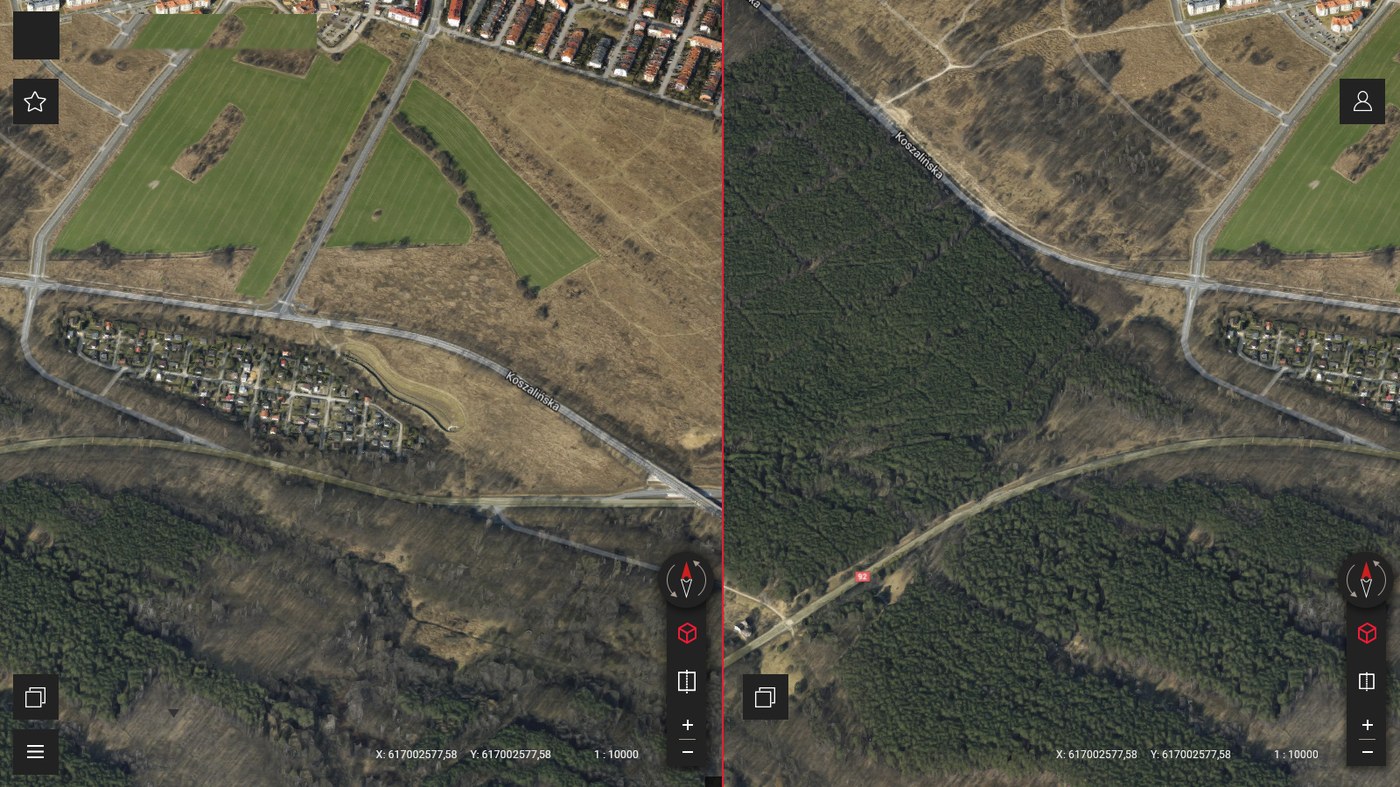
A concept, and presented as one. It was never commissioned, never built, and never deployed — the interface is the whole of the work.
It sits in this portfolio for one reason: it is the clearest evidence that we design tools, not only pages. Everything else here is a website, however complex. This is an application, and the thinking behind it is the same thinking we bring to product work that does get built.
Next project
Space4Logistics →